Practical Phuket water-treatment guidance
Clear answers for better water decisions
Evidence-led guidance on testing, sediment, activated carbon, UV-C, system sizing, installation and maintenance for Phuket properties.
- 18
- direct answers
- 5
- topic areas
- Phuket
- property focused
Browse the knowledge hub
Explore answers by topic
Not sure where to begin?
Find your starting point
Choose the closest concern and jump directly to the most useful first answer.
FAQ topic 3 answers
Water sources and symptoms
Start with the source and the symptom. The same-looking problem can require a different response in a well, storage tank or municipal supply.
Water sourceDo I need a different system for well water, tank water or municipal water?
Yes. Well, municipal, trucked and stored water can differ in sediment, hardness, disinfectant residual, dissolved minerals and microbiological risk. Tank condition and plumbing also affect the result. PWS reviews the source, storage arrangement, pressure and test information before selecting treatment stages instead of assuming one standard package fits every Phuket property.
See how PWS uses laboratory resultsSymptomsWhy does my water smell or look discoloured?
Odour or colour can come from source-water chemistry, organic material, iron or manganese, a dirty storage tank, pipe corrosion or stagnant plumbing. The visible symptom alone does not identify the cause. A useful recommendation combines water testing with a review of where and when the problem appears, including whether it affects every tap.
Review the PWS testing approachSafetyDoes clear water mean the water is safe?
No. Clear water can still contain microorganisms or dissolved substances that cannot be judged by sight, taste or smell. Appearance is useful for noticing sediment or colour, but it is not a safety test. When suitability matters, use appropriate laboratory testing and choose treatment for the measured concern and intended use.
Understand the published test contextFAQ topic 3 answers
Testing and treatment selection
Testing replaces guesswork with evidence and helps separate particle, taste, hardness, chemical and microbiological concerns.
TestingShould I test the water before buying equipment?
Testing is strongly recommended when the source is a well, quality varies, staining or odour is unexplained, or the system is expected to address a specific health or chemical concern. Results help avoid buying equipment that targets the wrong problem and provide a baseline for selecting sediment, carbon, softening, specialist media or disinfection stages.
View laboratory result examplesLaboratoryWhen is laboratory water testing required?
Laboratory testing is appropriate when a property relies on well or uncertain source water, when water may be used for drinking, when microbiological or chemical performance must be verified, or when symptoms persist after maintenance. The required parameters depend on the source and intended use; a generic test panel does not answer every treatment question.
Ask PWS about the right next testAssessmentWhat information helps PWS recommend the right treatment?
Share the water source, property type, number of bathrooms, normal occupancy, known peak-demand periods, pressure or flow issues, visible symptoms, tank arrangement and any recent test results. Photos of the tank, pump and proposed installation area also help. PWS can then identify what still needs testing or a site inspection before quoting.
Send your property detailsFAQ topic 4 answers
Filtration technologies
Each stage has a specific job. Good systems combine only the processes needed for the measured water and the property demand.
UV-CWhen is UV-C disinfection useful?
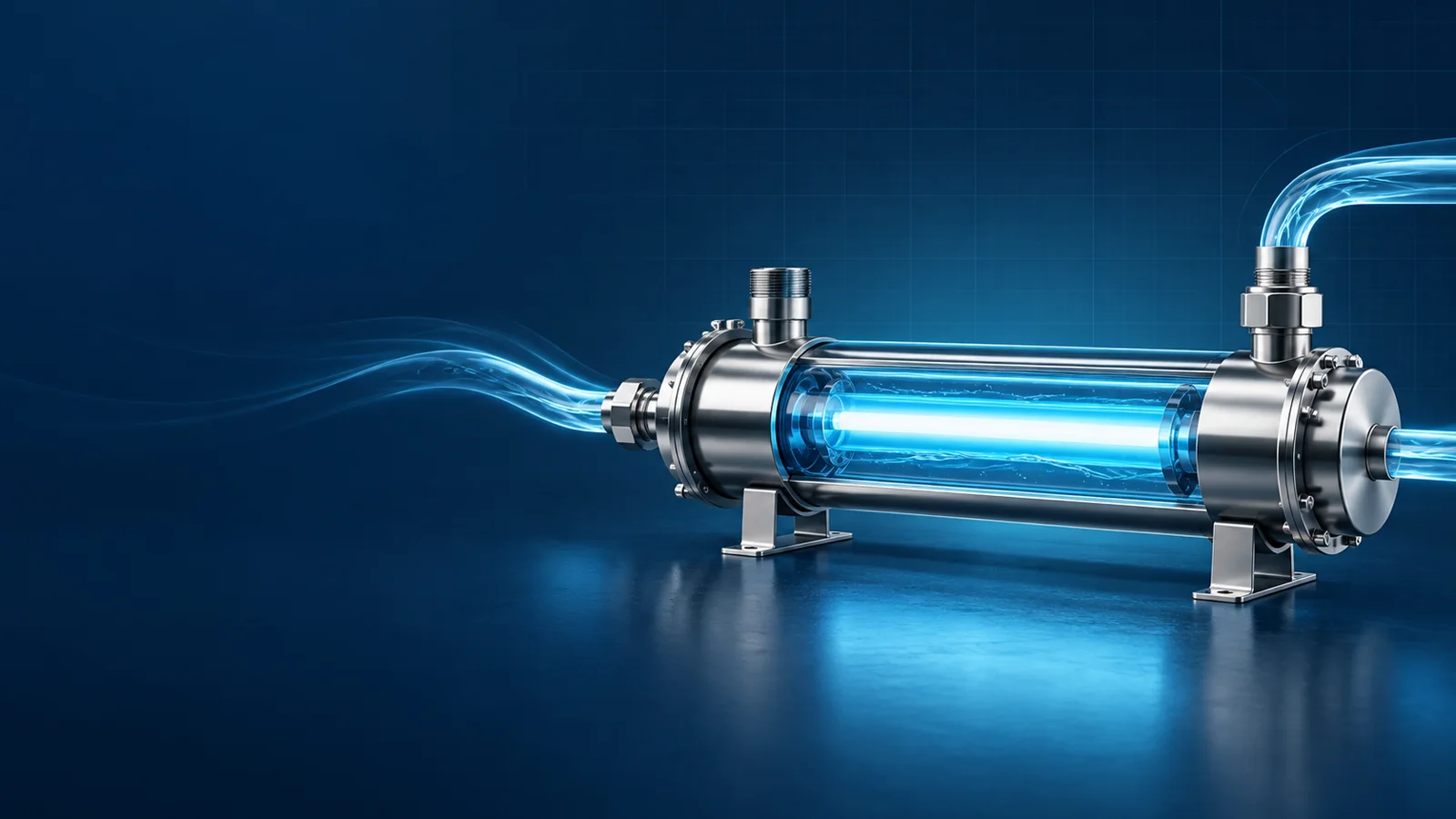
UV-C is useful as a final disinfection stage for clear, pre-filtered water when microbiological control is required. Performance depends on validated dose, peak flow, water clarity, lamp output and sleeve condition. UV does not remove sediment, hardness, salts, metals or most dissolved chemicals, and it leaves no disinfectant residual in downstream plumbing.
Read the UV-C water-treatment guideUV limitsCan UV-C treat cloudy or sediment-heavy water?
Not reliably without suitable pre-treatment. Particles, colour, iron, manganese or scale can reduce the UV energy reaching microorganisms or foul the quartz sleeve. Sediment and any measured water-quality problems should be controlled before the UV chamber. The UV unit must also be sized for the property’s actual peak flow rather than average daily use.
Learn what affects UV performanceSedimentWhat does sediment filtration remove from water?
Sediment filtration traps suspended particles such as sand, silt, clay, pipe scale and rust. It can improve clarity and protect carbon media, UV equipment, plumbing and appliances. It does not reliably remove dissolved salts, hardness, nitrate, metals, chemicals or every microorganism. Micron rating, housing size, particle load and peak flow all affect performance.
Read the sediment-filtration guideActivated carbonWhat does activated carbon remove, and does it remove hardness?
Activated carbon can reduce chlorine and selected compounds that affect taste and odour, depending on the media, contact time, flow and water chemistry. It is not a hardness treatment and is not dependable stand-alone disinfection. Dissolved calcium and magnesium require an appropriate softening or other targeted process when testing confirms that treatment is needed.
Read the activated-carbon guideFAQ topic 4 answers
System sizing and installation
A technically suitable treatment train still needs enough flow, pressure and service access for the property where it will operate.
FlowWhy does peak flow rate matter?
Peak flow is the amount of water the property may demand when several outlets run together. An undersized system can cause pressure loss, reduce contact time or exceed a UV unit’s rated flow. Villas, hotels and busy rental properties often need more capacity than a small home even when their total daily water use appears similar.
Explore whole-property systemsSizingHow is a system sized for a home, villa or hotel?
Sizing considers source-water results, peak simultaneous flow, pressure, number of bathrooms or outlets, occupancy, storage capacity and the service rate of each treatment stage. Hotels and rental villas may also have sharp demand peaks. PWS confirms these factors before selecting vessel sizes, filter housings, pumps, UV capacity and the required bypass arrangement.
Compare PWS system configurationsPlacementWhere should a whole-house filtration system be installed?
The system should treat the intended main water line while remaining accessible for cartridge changes, media service, UV-lamp replacement, sampling and pressure checks. The location also needs suitable drainage, weather protection, electrical supply where required and enough clearance around the equipment. A site review prevents maintenance access from becoming an afterthought.
Request a site consultationInstallationHow long does installation normally take?
Installation time depends on the treatment stages, pipework changes, equipment location, electrical or drainage requirements and whether the property must remain operational during the work. PWS confirms the expected schedule after reviewing the site and system design. Complex hotel, commercial or retrofit installations naturally require more planning than a straightforward residential installation.
Discuss installation requirementsFAQ topic 4 answers
Maintenance and costs
Service intervals and project cost depend on water quality, usage, equipment capacity and the treatment goal—not a universal calendar or package price.
CartridgesHow often should sediment filters be replaced?
Replacement frequency depends on the source, particle load, cartridge capacity, housing size and water use. A rising pressure drop or falling flow can indicate loading, but some systems need scheduled inspection before performance changes are obvious. Follow the filter manufacturer’s limits and investigate unusually rapid blockage instead of repeatedly replacing cartridges without finding the cause.
Understand sediment-filter maintenanceUV serviceHow often should a UV-C lamp be replaced?
Replace the UV lamp at the interval specified by its manufacturer, even if the lamp still produces visible light. Visible operation does not confirm the required UV output. Sleeve cleaning, alarm or sensor checks and upstream-filter maintenance are also important. Record the service date so replacement is based on operating requirements rather than waiting for failure.
Review the UV maintenance checklistService planWhat maintenance does a whole-house system require?
Typical maintenance can include sediment-cartridge replacement, carbon or treatment-media service, UV-lamp and sleeve care, pressure and flow checks, leak inspection, cleaning or sanitising housings, and retesting when the source or symptoms change. The correct plan should list each component, its inspection trigger and the manufacturer’s requirements rather than rely on one interval for everything.
Ask for a system-specific maintenance planQuotationHow much does a whole-house water-filtration system cost in Phuket?
Cost varies with the water analysis, required flow, treatment stages, equipment capacity, installation access and plumbing changes. A price without those details can be misleading because two similar properties may have different source water or demand. PWS prepares a property-specific recommendation and quotation after reviewing the available results and installation conditions.
Request a tailored quotationPrepare for a useful recommendation
Turn your water concern into a clear next step
Share the details below. PWS will identify whether testing, a site visit or a treatment recommendation should come next.
- Water source
- Property type
- Bathrooms and occupancy
- Peak-use concerns
- Tank and pump photos
- Available test results
Evidence and further reading
Go deeper with trusted guidance
The PWS guides explain the conditions and limitations behind these answers and reference relevant public-health guidance.