
Water treatment guide
What Does Sediment Filtration Remove from Water?
Sediment filtration traps suspended particles such as sand, silt and rust before water reaches later treatment stages. It can improve clarity and protect carbon media, UV equipment, plumbing and appliances. Performance depends on filter rating, flow and condition. Sediment filters do not reliably remove dissolved chemicals, salts, hardness or every microorganism.
Particle filtration is a protective first stage
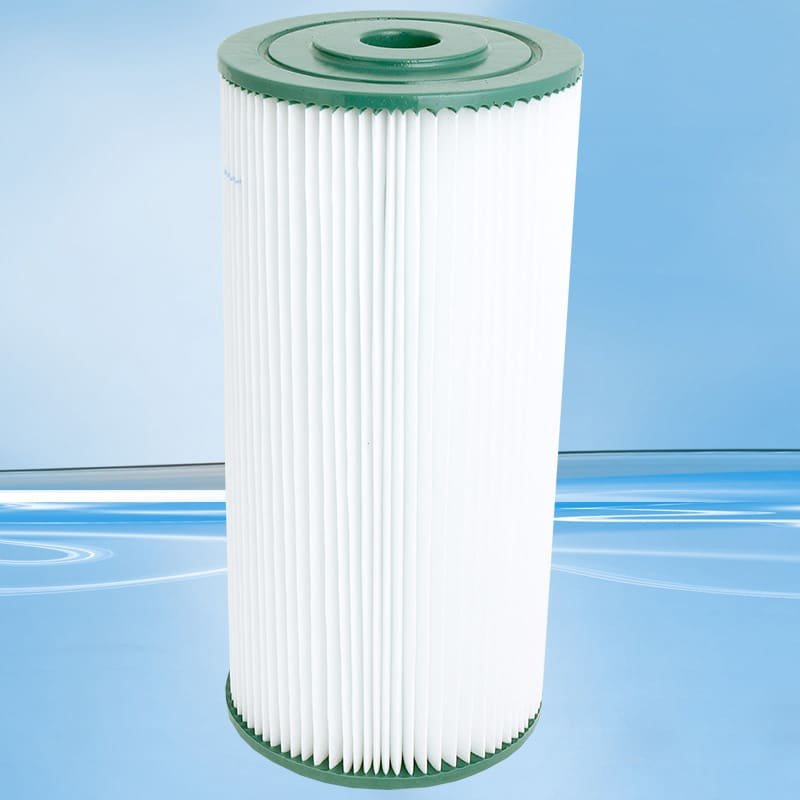
Sediment filters use a physical barrier or graded media to retain particles larger than the filter’s effective openings. The captured material may include sand, silt, clay, pipe scale and rust. This can reduce visible cloudiness and the particle load placed on later equipment. The CDC treatment overview explains that filtration media and pore sizes are selected for different water conditions.
| Factor | Why it matters |
|---|---|
| Particle size | A finer micron rating can capture smaller particles but may block faster. |
| Peak flow | An undersized housing can cause pressure loss when several outlets run together. |
| Particle load | Heavy or variable sediment may need staged filtration, a larger housing or a washable pre-filter. |
| Downstream equipment | Carbon, membranes and UV benefit from the particle control specified for their inlet water. |
A finer filter is not automatically better. The useful design balances particle capture, pressure, capacity and maintenance.
What sediment filtration cannot establish
Clear-looking water is not proof of safe or suitable water. A basic sediment cartridge does not reliably remove dissolved salts, hardness minerals, nitrate, arsenic, chlorine or other dissolved chemicals. Its ability to remove microorganisms depends on an explicitly rated pore size and verified product claim; ordinary whole-house sediment filtration should not be treated as a stand-alone disinfection step.
Testing matters because different concerns need different technologies. The CDC home-treatment guidance recommends testing the water and choosing treatment for the specific germs or chemicals of concern.
Local context
A Phuket planning example
After tank cleaning, pipe work or a change in source supply, a Phuket property may see a temporary increase in sand or rust. A staged arrangement can capture larger debris first and finer particles second without forcing one cartridge to do every job. If laboratory results also show hardness, iron, organics or microbiological concerns, those require their own treatment stages. Compare PWS whole-house systems and the context provided with our published laboratory results.
When to service a sediment filter
- Track pressure before and after the filter where gauges are available.
- Replace or clean the element when pressure drop, flow or the manufacturer’s schedule indicates.
- Do not judge only by colour; some fine loading is not obvious through an opaque housing.
- Investigate sudden or repeated heavy loading instead of only replacing cartridges.
- Sanitise and reassemble housings according to the equipment instructions.
The right interval depends on source water, usage, housing size and filter capacity. For practical questions, visit the PWS FAQ.