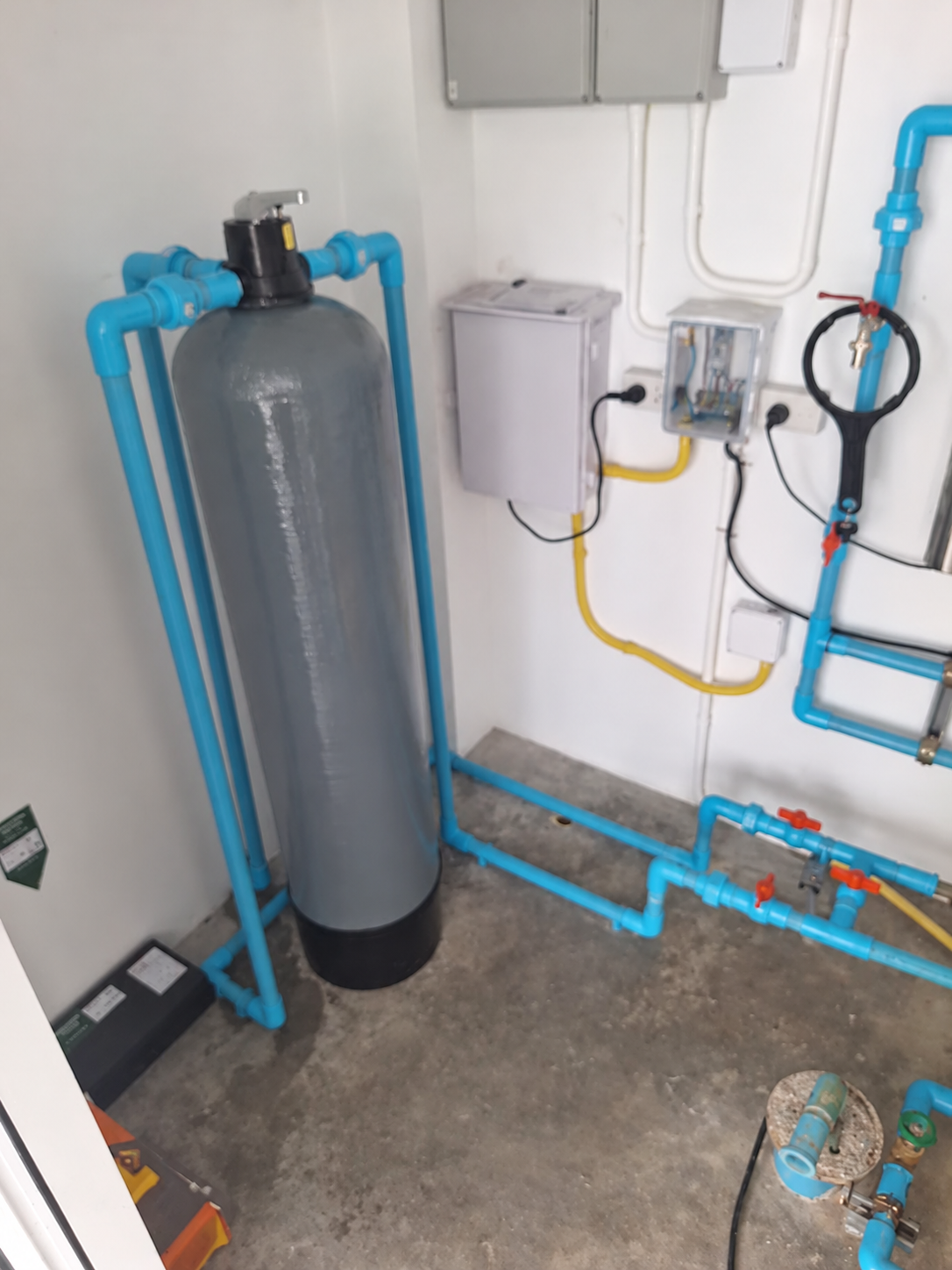

A cleaner start for the whole water system
Why Install a Pre-Filter Before a Phuket Water-Storage Tank?
When coarse sediment reaches a storage tank, it can settle there, be stirred up again and travel into pumps, taps and finer filters. A well-placed pre-filter catches more of that material before it enters storage—helping the tank stay easier to manage and giving everything downstream a cleaner start.
What changes when sediment is stopped before the tank?
A storage tank is designed to hold water, but it can also become a collection point for the sand, grit and other coarse material arriving with the supply. Catching more of that material first can make the entire system feel simpler to own.
Instead of allowing sediment to settle out of sight and later move towards the pump, the pre-filter creates an accessible place to capture and manage it. That does not make the tank maintenance-free, but it can reduce the amount of coarse material entering storage and help the equipment after it work under cleaner conditions.
Easier tank care
Less incoming coarse sediment can mean less material accumulating at the bottom of the storage tank.
Better equipment protection
Pumps, valves and fine cartridges receive water with part of the heavier sediment already removed.
A cleaner starting point
Every later filtration stage can focus more effectively on the specific job it was chosen to do.
Why place the pre-filter before storage?
Placement changes what the filter protects. Installed before the tank, the pre-filter helps prevent suitable coarse sediment from entering the storage stage in the first place.
- The supply brings sedimentWell water, municipal water and delivered water can all carry different amounts of sand, grit or suspended material.
- The pre-filter catches the coarse materialA correctly selected unit removes part of that load before it reaches the storage tank.
- The tank receives cleaner incoming waterThere is less suitable coarse material available to settle, accumulate or be stirred up later.
- Downstream stages do their intended jobPumps and finer treatment components face less unnecessary sediment loading.
The tank still needs routine inspection and cleaning. Pre-filtration improves the starting conditions; it does not remove every particle or prevent issues that begin inside the tank.
Is this the right position for every property?
The idea is simple, but the right equipment and position depend on how the property receives, stores and distributes its water. PWS looks at the complete route rather than treating the pre-filter as a one-size-fits-all add-on.
It may be a good fit when
- Visible sediment regularly arrives from the water source.
- Deposits build up inside the storage tank.
- Pumps or fine filters are receiving unnecessary solids.
- The owner wants an accessible first line of defence.
PWS still checks
- Peak water demand, flow and available pressure.
- The likely particle size and sediment load.
- Access for isolation, flushing and servicing.
- Drainage, pipework and material suitability.
The best position is the one that protects the property’s actual water path and remains practical to maintain—not simply the position shown in a product brochure.
What does easier ownership look like?
A well-planned pre-filter gives the owner and service team a clear place to see what the source water is carrying. That makes maintenance less mysterious and helps changes in sediment load become visible before they create a larger problem elsewhere.
See what is being caught
A visible service point shows when the incoming water is carrying more sediment than usual.
Service one accessible point
Flushing or cleaning a reachable pre-filter is simpler than discovering every issue after the tank.
Notice changes sooner
Heavy rain, well work or a change of supply can be spotted through loading, flow and pressure changes.
There is no universal service interval for every Phuket property. The right schedule should reflect the source, sediment load, occupancy, equipment and manufacturer guidance.
What can’t a pre-filter solve on its own?
If the problem is unclear, water testing helps separate visible sediment from concerns that cannot be identified by sight alone.
Keep sediment out of storage from the start
PWS can inspect the water source, tank, pumps and filtration layout, then recommend a pre-filter position that suits the property and is practical to maintain.