
Stop sediment before it travels through the home
How a HYDRA Pre-Filter Protects a Phuket Home’s Water System
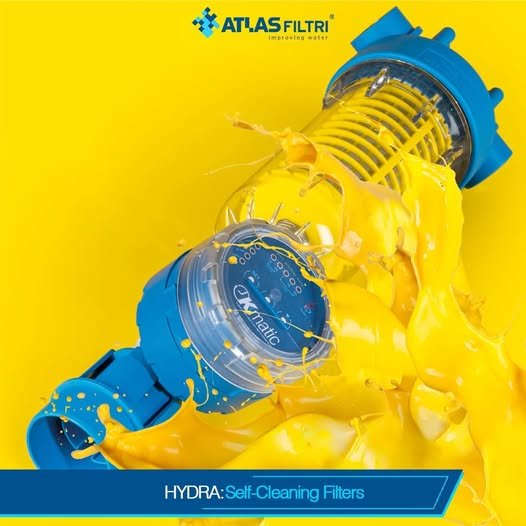
When grit and suspended particles enter a property, every tank, pump, pipe and filter downstream has to deal with them. A HYDRA pre-filter catches the coarser material near the point of entry and lets it be flushed away—giving the rest of the water system an easier job.
What does a HYDRA pre-filter do?
Think of it as the first line of defence for the property’s water system. Incoming water passes through a reusable stainless-steel mesh, which holds back coarser particles before they can travel farther into the home.
The configuration shown by PWS uses a nominal 90-micron mesh. It is intended for coarse sediment—not for dissolved salts, hardness or disinfection—but stopping that visible material early can still make a meaningful difference to everyday ownership.
Less grit entering the property means less material settling in a storage tank, reaching pump components, collecting in tap strainers or loading the cartridge filters that follow. It does not remove the need for maintenance, but it can make the whole treatment chain easier to look after.
Cleaner storage
Reducing coarse sediment before the tank can slow the amount of visible material settling at the bottom.
Less strain downstream
Pumps, valves, strainers and later filtration stages receive less coarse debris from the incoming supply.
Simpler routine care
Collected sediment can be discharged through the drain valve instead of requiring a disposable cartridge for every clean.
Why install it before the tank or main filtration?
The earlier sediment is intercepted, the fewer parts of the property it can reach. That is why a HYDRA is commonly considered near the main water entry point, before a storage tank or ahead of a larger filtration system.
A unit beside the meter can give broad protection to the property. A unit between a well supply and a tank focuses on reducing material entering storage. Positioned before cartridge filters or treatment media, it can take some of the coarse load off the more specialised stages.
The best location is not identical for every home. PWS looks at the water source, storage arrangement, pumps, flow demand, pressure, available drain route and service access before recommending where the pre-filter should sit.
One well-placed pre-filter can protect several parts of the water system at once—but only when its size, position and connection details match the property.
How does the flushing cycle work?
“Self-cleaning” means the mesh is cleaned by a flushing or backwash action. It does not mean the unit can be installed and forgotten.
- Water passes through the meshThe reusable stainless-steel screen retains coarser material from the incoming supply.
- Sediment becomes visibleLoading builds at a rate that depends on the source, season and what is happening in the supply network.
- The drain valve is openedThe HYDRA backwash action helps release collected material and sends it out through the flushing line.
- The system is checkedThe drain, seals, pressure and water flow are reviewed so the unit is ready to continue protecting the property.
The flushing frequency should reflect actual conditions rather than a universal calendar. A property receiving frequent sediment may need attention more often than a home with a relatively stable supply.
What must be right for the installation to work well?
The filter should fit the home’s water demand—not become a restriction. The selected model, flow direction, connection size, working pressure and drain arrangement all matter.
The PWS brochure lists 1-inch BSPP connections, a working-pressure range of 1.8 to 8 bar and a maximum flow rate of 6,000 litres per hour for the featured configuration. Other HYDRA variants differ, so those figures should never be treated as universal.
A good installation provides
- Enough capacity for the property’s expected flow.
- Correct orientation and accessible isolation valves.
- A safe drain route for the flushing water.
- Space to inspect the housing and service the mesh.
- A position protected from damage and unsuitable exposure.
The HYDRA does not replace
- Testing when the water-quality problem is uncertain.
- Treatment for dissolved salts, hardness or odour.
- UV-C or another suitable disinfection process.
- Normal tank, cartridge and plumbing maintenance.
- Correct sizing of pumps and supply pipework.
What does simple ownership look like?
A useful pre-filter should make maintenance more manageable, not mysterious. The owner or service team should be able to see when sediment is building, flush it safely and notice when the system needs a closer inspection.
After unusual discolouration, road or supply work, heavy rain, plumbing repairs or a change in water source, an extra check may be worthwhile. The servicing routine should follow the installed model and the property’s real conditions.
Give the whole water system an easier job
PWS can inspect the incoming supply, confirm the required flow and pressure, and recommend a HYDRA pre-filter position that works with your tanks, pumps and wider filtration plan.